Wood Fence Installation in Elizabethton, TN
Privacy, board-on-board, shadowbox, four-board, and picket — built with the right materials for the Tri-Cities climate and the grade your lot actually has.
Request Your Free Estimate (423) 830-4407Wood Fence in Elizabethton, TN
Wood is still the most popular privacy fence material in Elizabethton, and for good reason. It looks warm against the Blue Ridge backdrop, blocks the line of sight, and runs cheaper per foot than vinyl or aluminum. But in northeast Tennessee, a wood fence is only as good as the install. Elizabethton Fence Builders builds wood fences that handle the freeze-thaw, the humidity, and the storms that roll off Roan Mountain — using pressure-treated pine, western red cedar, or locust posts, with the structural details that decide whether the fence lasts seven years or twenty.
Wood Fence Styles We Install
<p>Most homeowners around Carter County want a six-foot privacy fence for the backyard, and that's the bulk of what we build. But there are real choices inside that category that affect the look, the cost, and how the fence handles a sloped lot.</p><p><strong>Board-on-board</strong> overlaps the pickets so there's no gap when the wood shrinks in dry weather — full privacy year-round, and forgiving on lots that move with the freeze-thaw. <strong>Shadowbox</strong> alternates pickets on each side of the rail, which looks identical from both sides and lets air through during the summer. <strong>Standard dog-eared privacy</strong> is the lowest cost per foot and works well when budget is the priority. <strong>Picket fence</strong> in the three-to-four-foot range still has a strong following for front yards and the older streets around downtown Elizabethton. <strong>Four-board paddock fence</strong> is the standard for horse properties out toward Stoney Creek and Hampton.</p>


Get Your Wood Fence Quote
Limited Slots Available This Month!
Materials That Hold Up in Northeast Tennessee
<p>Pressure-treated southern yellow pine is the standard for Carter County wood fences. It's treated for ground contact, resists termites, and handles the wet shoulders along the river bottoms. The trade-off is that pine warps and twists more than premium woods, so picket selection and proper fastening matter.</p><p>Western red cedar is the upgrade — naturally rot-resistant, far more stable through the freeze-thaw cycle, and the color ages to a soft gray that fits an Appalachian property. Black locust, milled regionally, makes the best post material for the wet ground around the Doe and Watauga river bottoms — it'll outlast treated pine in the dirt by decades. We'll walk you through the cost difference and help you pick what fits the lot and the budget.</p>
Why Our Wood Fences Last Longer
<p>The post is where most wood fences fail. We set every post in concrete footings at least 30 inches deep — below the local frost line — and deeper at corners, gates, and on the lower-drainage lots near the river. Posts get crowned at the top so water and snowmelt shed instead of soaking in.</p><p>A pressure-treated kickboard runs along the bottom of every privacy fence we build. That keeps the picket bottoms out of the wet grass and the late-winter snowmelt, which is where rot starts. Fasteners are hot-dipped galvanized or stainless — not the cheap bright nails that bleed black streaks down the pickets after one rainy season. Gates get diagonal bracing and heavy-duty hinges so they don't sag through a hot summer or bind up in a January cold snap.</p>
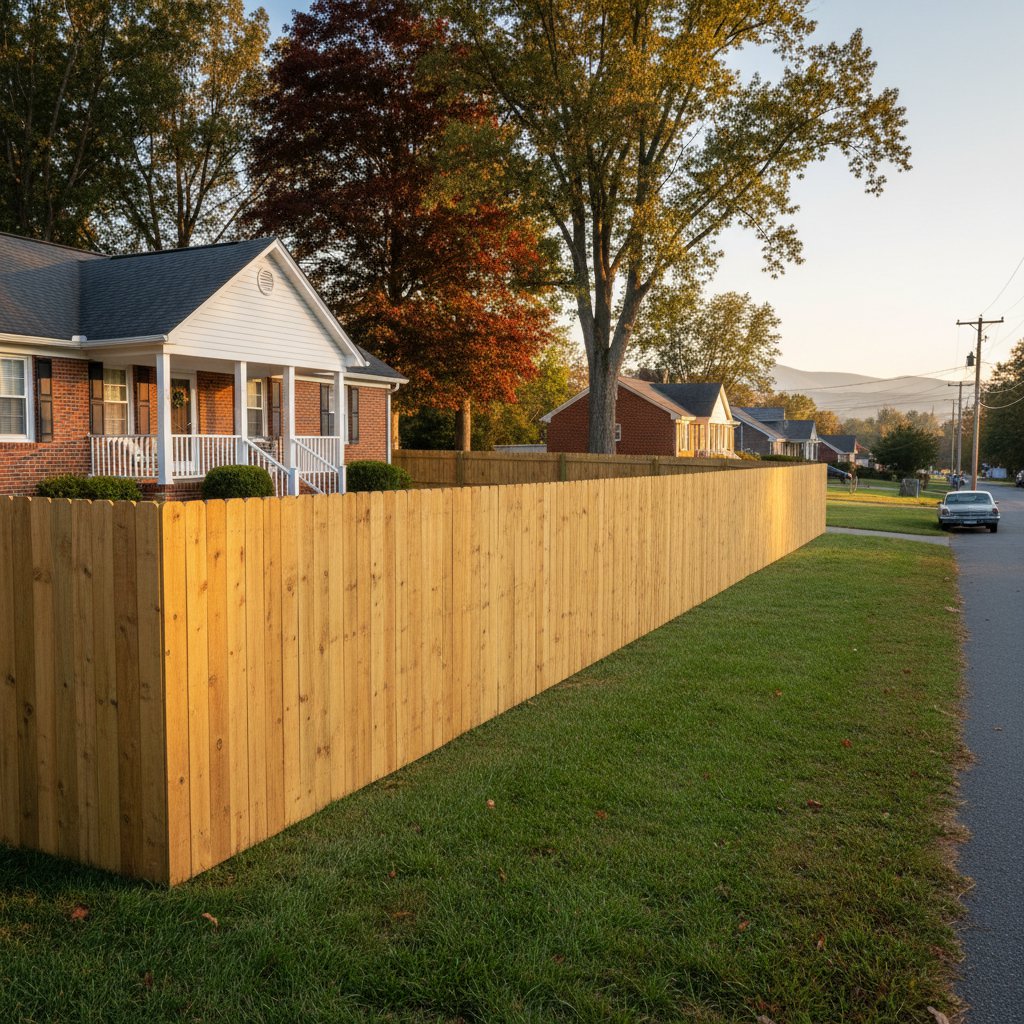
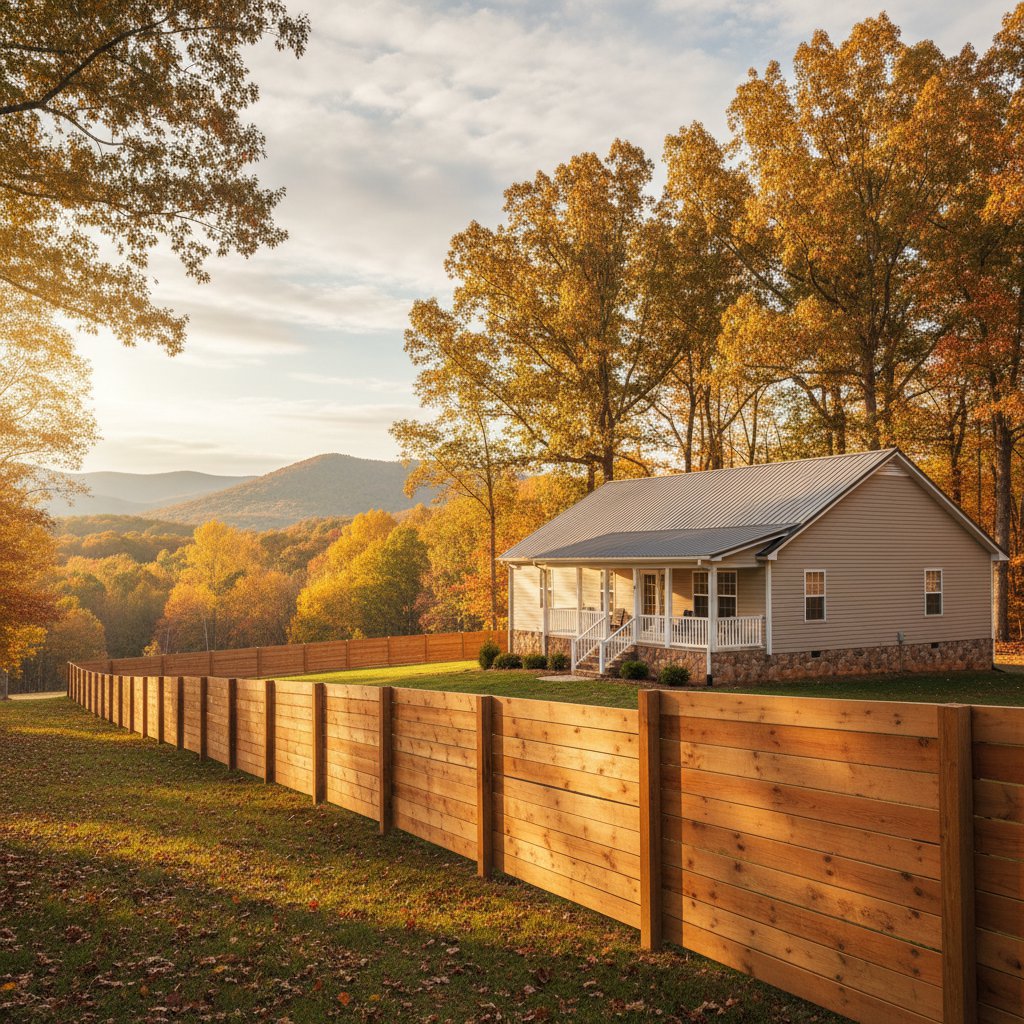
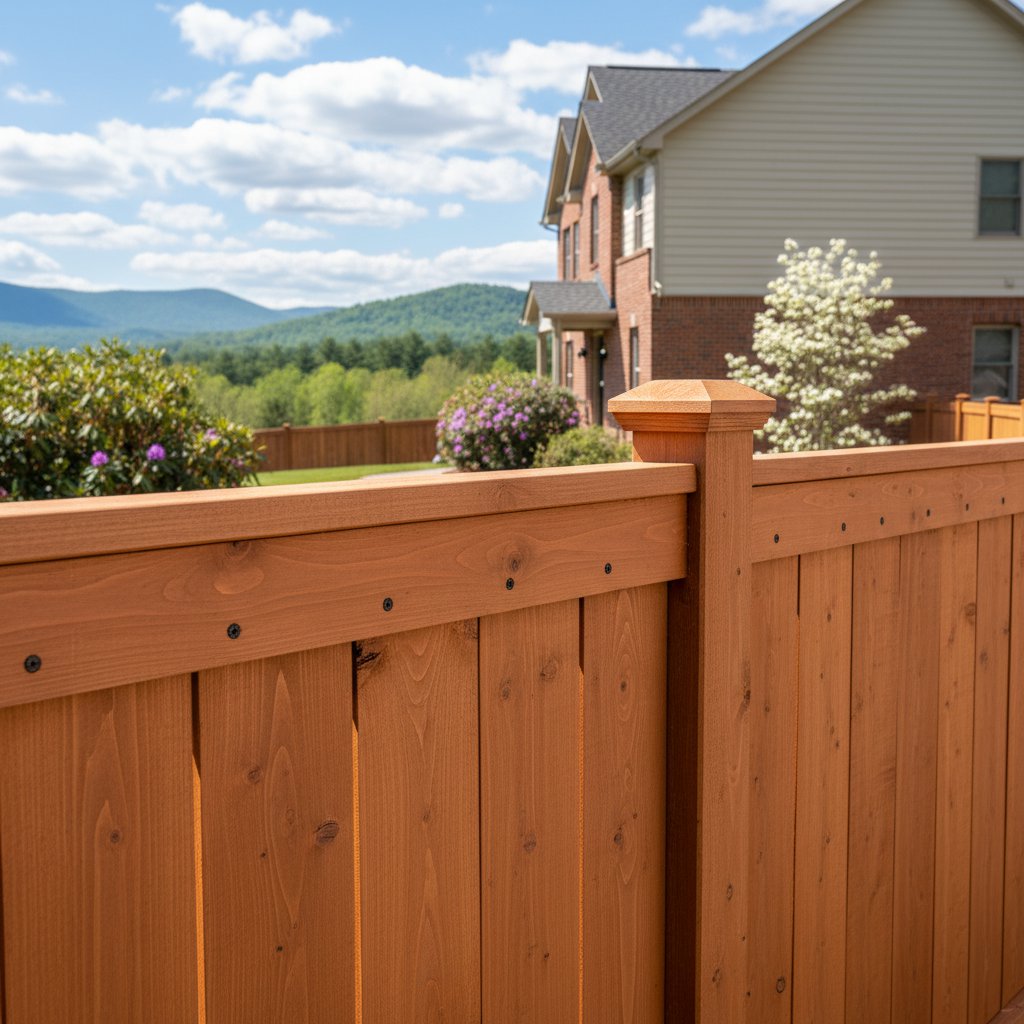
Recent Wood Fence Installations
Signs You're Ready for a New Wood Fence
Wood fences age in predictable ways around here. If you're seeing any of these, it's time to call us out for a look.
Rotted Bottoms
Picket bottoms turning soft, dark, or crumbly. Usually means the original fence had no kickboard and a few too many winters of wet grass sitting against the wood.
Leaning Sections
Posts pulling out of the ground after a heavy thaw or shifting in shallow footings. Patching one section often just shifts the problem to the next post.
Sagging Gates
Gate drops, latch won't catch, hinges torn loose from the post. Almost always a sign the gate was built without diagonal bracing or the post wasn't set below the frost line.
Visible Daylight Gaps
Pickets shrunk apart so you can see straight through to the neighbor. Old privacy fence — time for board-on-board or a fresh run of pickets.
Our Wood Fence Installation Process
Same process on every wood job, from a 40-foot back run to a full perimeter on five acres.
On-Site Measure
We walk the property line, mark the corners, measure the run, check the grade, and talk through style and material options. Written quote comes by email within a day or two.
Permit and HOA
If the Elizabethton permitting office, Carter County, or your HOA needs paperwork, we handle it. Most submittals turn around in a week or two.
Installation
Posts go in first, set in concrete below the frost line and given time to cure. Then rails, kickboard, and pickets — stepped on slopes where needed. Gates last, so they swing true against the finished line.
Walk-Through and Cleanup
We walk the finished fence with you, address any punch-list items on the spot, haul off the old materials, and rake the line. Done.
What Our Clients Say
"Six-foot board-on-board privacy run on a sloped backyard off Lynn Avenue. The grade drops nearly four feet across the line and they stepped the panels clean instead of trying to rack it. Two winters in, no leaning posts, no gaps after the freeze-thaw."

Ready for a New Wood Fence?
Call Elizabethton Fence Builders at (423) 830-4407 or request a free estimate online. We'll come measure, write you a flat quote, and get the job on the schedule.