Farm & Ranch Fence Installation in Elizabethton, TN
Field fence, hi-tensile, four-board, and pipe-and-cable for the cattle and horse properties through Carter County and the surrounding Appalachian foothills.
Request Your Free Estimate (423) 830-4407Farm & Ranch Fence in Elizabethton, TN
Carter County is still working country. The valleys around Hampton, the pastureland out Stoney Creek, the rolling acreage between Elizabethton and Roan Mountain — there are cattle, horses, sheep, and ag operations on every back road. Elizabethton Fence Builders builds farm and ranch fencing the way it ought to be done on a working property — hi-tensile or woven wire on heavy locust corner posts, board fence where the look matters, gates wide enough for the tractor, and runs laid out so the livestock actually respect them.
Types of Ag and Equestrian Fencing We Install
<p><strong>Woven wire field fence</strong> with a strand of barbed wire on top is the standard for cattle. We run 12.5-gauge high-tensile woven on 16-foot or wider spacing depending on the spec. <strong>Hi-tensile smooth wire</strong> works for cattle on long runs where cost per foot is the priority — five to seven strands with electric options. <strong>Three-board and four-board paddock</strong> in pressure-treated pine or oak is the classic horse-property look around Elizabethton — strong, visible, and the standard the boarding barns expect.</p><p><strong>Pipe-and-cable</strong> handles the heaviest horse and cattle work — welded steel pipe corners and line posts, multiple cable strands, virtually maintenance-free. <strong>Vinyl ranch rail</strong> gives the four-board look without the staining. <strong>No-climb horse fence</strong> with a 2x4 woven mesh keeps hooves out and predators away — the right call for foaling pastures and pony paddocks.</p>


Get Your Farm Fence Quote
Limited Slots Available This Month!
Corner Posts, Bracing, and the Stuff That Matters
<p>A farm fence lives or dies at the corner. On a long run of woven wire or hi-tensile, every pound of tension goes into the corner brace — and a corner brace that wasn't built right will pull out within a season. We brace every corner H-style with at least one diagonal compression brace, set the corner post deep in concrete or with pressure-driven backfill, and run a brace wire as belt-and-suspenders. The result is a corner that doesn't move when the wire is tensioned to spec.</p><p>Locust is the king of corner post material in northeast Tennessee. It'll sit in wet ground for thirty years and not rot. Where locust isn't available, we use pressure-treated CCA pine rated for ground contact. Steel pipe corners and braces are an option on the larger cattle operations where longevity matters more than upfront cost.</p>
Gates Sized for the Equipment You Actually Use
<p>One of the most common mistakes on farm fences is undersized gates. A twelve-foot gate is too narrow for a modern tractor with a brush hog. A standard 4-foot walk gate doesn't let a wheelbarrow through cleanly. We measure the equipment that needs to fit through before we spec gate widths.</p><p>Pasture gates get hung on heavy-duty hinges with offset pins so a horse or cow can't lift them off. Self-closing options keep livestock contained even when somebody leaves a gate open. Drive gates for the main farm entry can be tied to keypad or automatic openers if security is a concern — common on the equine properties around Hampton and the cattle operations out toward Mountain City.</p>
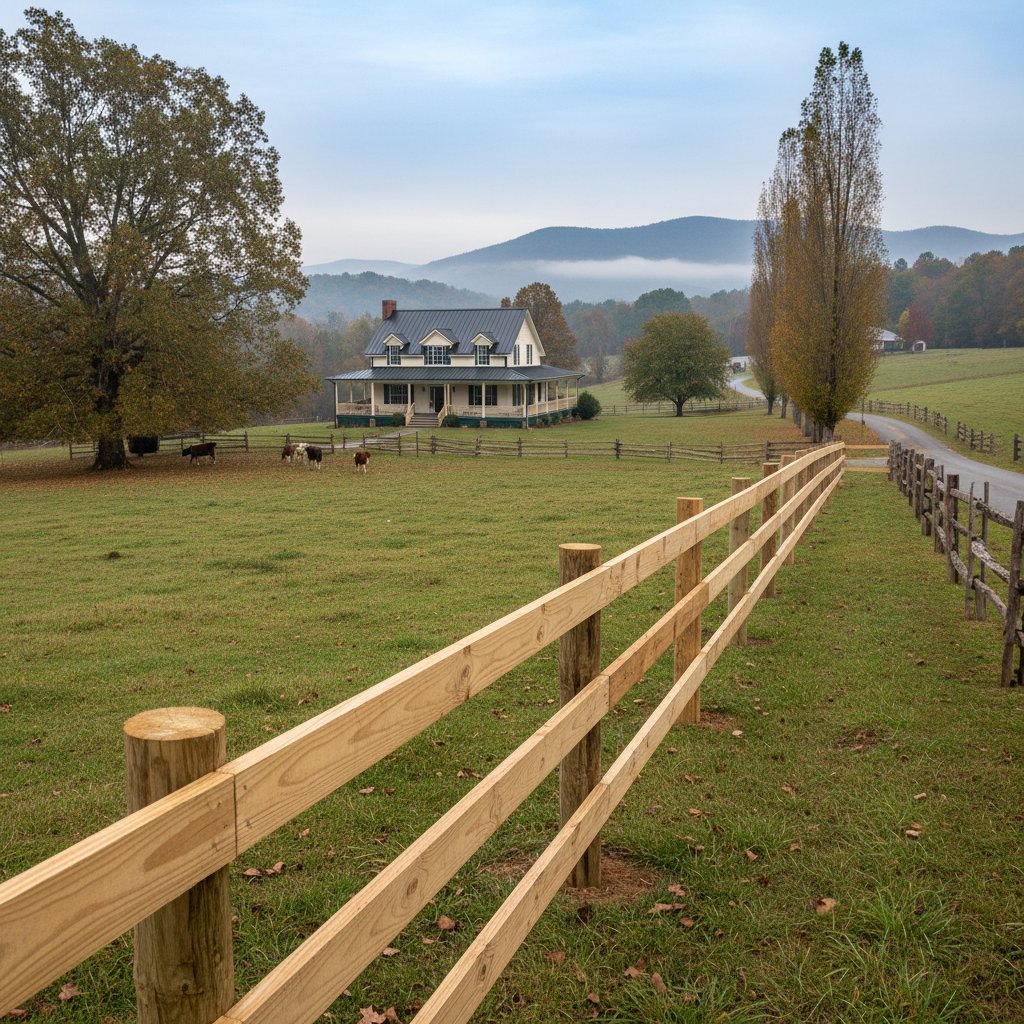
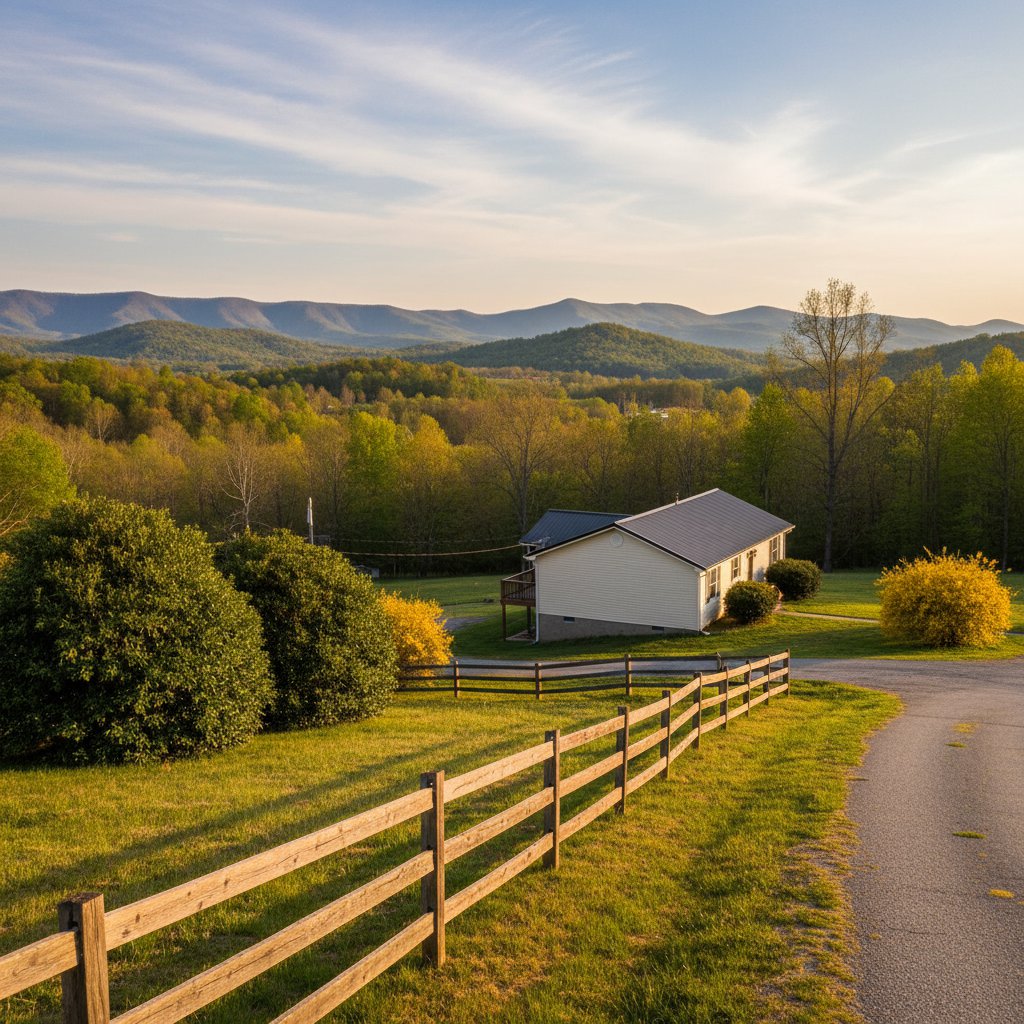
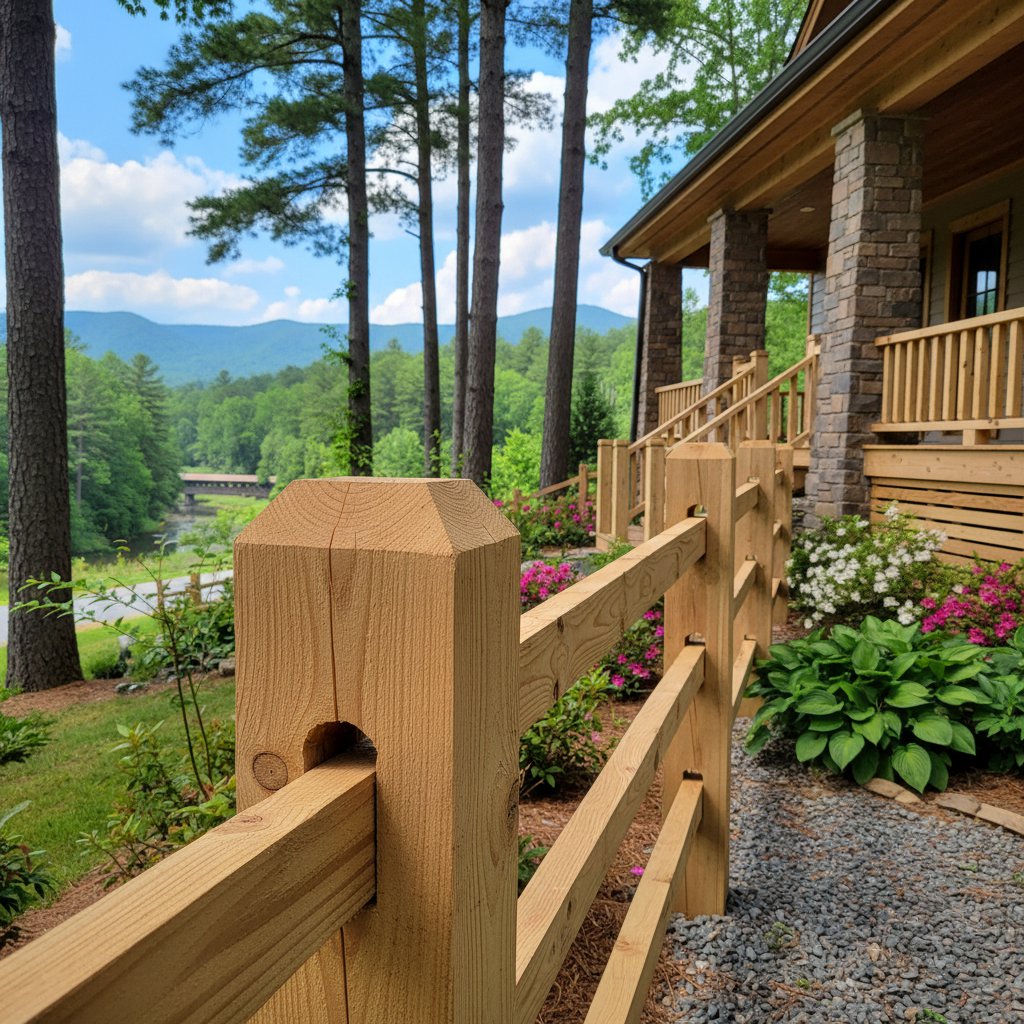
Recent Farm & Ranch Installations
Signs Your Farm Fence Needs Work
Working fences wear out. These are the most common things we get called for.
Sagging Wire
Woven or hi-tensile wire pulled out of tension, often after a corner brace shifted. Sometimes a re-stretch fixes it; sometimes the corners need to be rebuilt.
Rotted Wood Posts
Original treated-pine posts twenty years in have started to crumble at the ground line. Locust or steel pipe replacements last another generation.
Gates That Drag
Gate dragging the ground, latch hard to catch, hinge pulling out of the post. Usually a gate post issue, not a gate issue — re-set the post deeper.
Livestock Getting Out
Cattle pushing through low spots, horses crib-biting the top board, dogs slipping under the woven wire. Signs the fence is spec'd wrong for what's behind it.
Our Farm Fence Installation Process
We treat farm fence like working infrastructure, because that's what it is.
Property Walk
We walk the line with you, talk through what livestock will live behind the fence, map the corners and gates, and write a per-foot quote with the spec laid out.
Corner Layout
Corner posts and brace assemblies go in first. Concrete or compacted backfill, brace wire installed, every corner squared and plumb before line posts go up.
Line and Wire
Line posts drive in on spec spacing. Woven wire or hi-tensile gets stretched to manufacturer's tension and stapled or clipped to every post.
Gates and Final Check
Gates hang last, on posts set deep and heavy enough to hold them for years. We walk the finished line with you and address any punch-list items on the spot.
What Our Clients Say
"Six-foot board-on-board privacy run on a sloped backyard off Lynn Avenue. The grade drops nearly four feet across the line and they stepped the panels clean instead of trying to rack it. Two winters in, no leaning posts, no gaps after the freeze-thaw."

Need Farm Fencing?
Call Elizabethton Fence Builders at (423) 830-4407 or request a free estimate online. We measure ag jobs on-site and write a per-foot quote with materials and corner spec spelled out.